
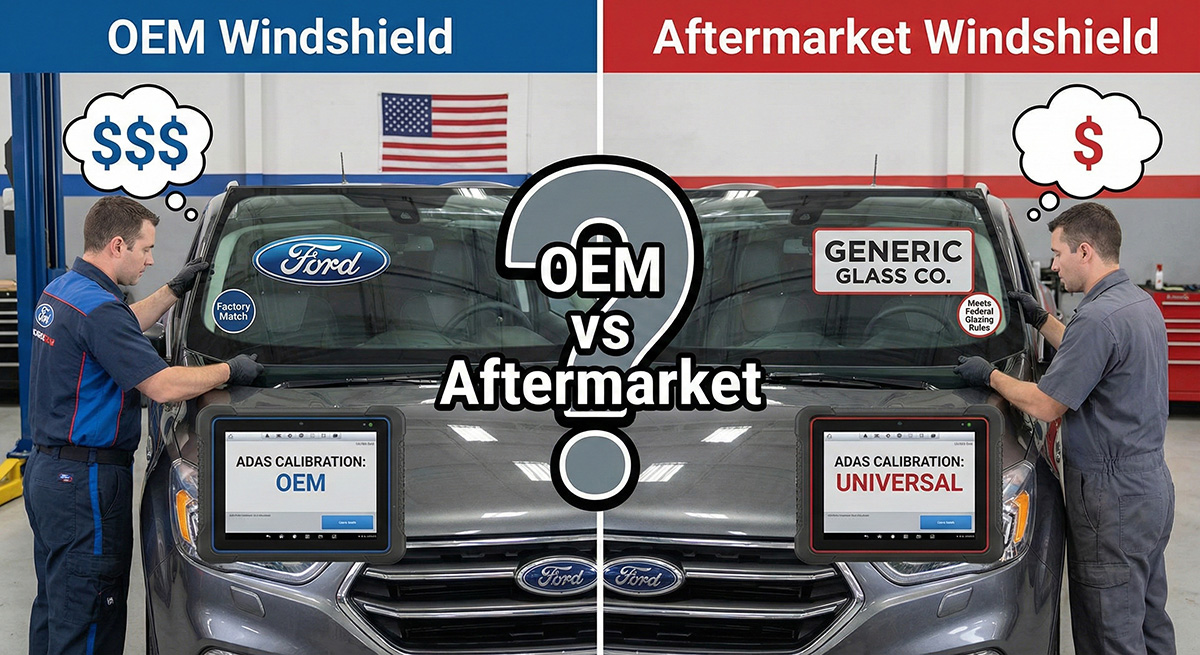
Searching “OEM vs aftermarket windshield” can feel confusing fast. One shop says OEM is the only safe choice. Another says the aftermarket is the same thing. Then insurance adds another layer: what is covered, what costs extra, and what happens if the car has cameras and sensors.
This guide breaks down windshield replacement OEM vs aftermarket. It covers safety, fit, ADAS cameras, and cost, so the right choice is easier for your car and your budget.
What Is an OEM Windshield?
OEM stands for Original Equipment Manufacturer. An OEM windshield is made to match the windshield your vehicle came with from the factory. In many cases, it is made by the same supplier that makes glass for the automaker, and it typically matches the original in shape, thickness, and features like tint bands or brackets.
Why dealerships recommend it: OEM glass is the “factory match” option. Dealerships often recommend OEM because it’s built to the automaker’s specs and is designed to fit and perform like the original.
Key idea: OEM means the closest match to what your car had when it was brand new.
What Is an Aftermarket Windshield?
An aftermarket windshield is made by a glass manufacturer that is not selling it as the automaker’s branded replacement part. It is built to fit your vehicle model, but it may not come from the same supply chain as the original.
Does aftermarket glass meet safety rules?
In the U.S., auto glass must meet federal glazing rules. Windshields must comply with FMVSS 205. You can also look for the “DOT” mark on the glass. That mark is part of the required certification marking for glazing materials.
When is aftermarket commonly used?
Aftermarket is often used when:
- The vehicle is older and OEM pricing is high
- Insurance policies default to non-OEM parts unless OEM is requested
- The goal is a cost-effective replacement that still meets standards
Key idea: Aftermarket can be safe, but the quality can vary by brand and, most importantly, by installation quality.
OEM vs Aftermarket Windshield: Key Differences
Here is a clear side-by-side view of windshield replacement OEM vs aftermarket:
| Feature | OEM Windshield | Aftermarket Windshield |
| Fit & shape | Designed to match factory specs | Made to fit, but may vary slightly by brand |
| Thickness | Typically matches original | Can be similar, but may vary |
| Optical clarity | Usually consistent with factory | Often good, but can vary by manufacturer |
| Tint band / markings | Often matches original | May differ slightly |
| ADAS camera area | Typically matched to original design | Can work well, but needs correct part + calibration when required |
| Price | Usually higher | Often lower |
| Availability | Sometimes special order | Often widely available |
Important note: Even perfect glass can cause problems if the installation is rushed or the adhesive is not applied correctly. A professional installation matters as much as the glass choice.
OEM vs OEE Windshield: Are They the Same?
This is where many drivers get stuck: OEM vs OEE windshield.
What does OEE mean?
OEE usually means Original Equipment Equivalent. It is commonly used to describe high-quality replacement glass that meets the same general standards as OEM, but does not carry the automaker’s logo.
How is OEE different from OEM?
- OEM: factory match and may include the automaker branding/logo
- OEE: equivalent style replacement, usually without the automaker logo
When is OEE a good alternative?
OEE is often a good middle ground for drivers who want:
- Quality close to OEM
- A lower price than OEM
- A part that still fits and performs well
Key idea: OEE vs OEM windshield is often about branding and supply chain, not just safe vs unsafe.
Safety Comparison: Is Aftermarket Windshield Safe?
A windshield is not just a piece of glass. It plays a real safety role in a crash.
Airbags and structural support
In many vehicles, the windshield helps support proper airbag deployment and helps the roof maintain strength in a rollover. If a windshield is poorly bonded (installed), it may not hold as intended.
When safety can be compromised
Safety issues are more likely when:
- The wrong glass is used (especially for ADAS vehicles)
- The installer uses poor-quality adhesive or incorrect curing time
- The technician does not follow proper install steps
A high-quality windshield installed poorly can be less safe than a standard windshield installed correctly.
Cost Comparison: OEM vs Aftermarket Windshield
OEM glass usually costs more than aftermarket. Price differences come from branding, supply chain, and availability.
Insurance impact
Insurance may cover windshield replacement, but policies vary. Some policies allow OEM only when it’s required for safety systems or when the driver pays the difference. The best step is to ask:
- Does the policy cover OEM?
- Is OEE acceptable?
- Is calibration covered if needed?
When OEM costs more
OEM can cost more in:
- Luxury vehicles
- Newer vehicles
- Vehicles with advanced camera systems and special windshield features
ADAS Compatibility: Why It Matters for Newer Cars
Many newer cars have ADAS features, like lane keeping, forward collision warnings, and automatic emergency braking. These systems often use a windshield-mounted camera.
After a windshield replacement, many vehicles need windshield camera recalibration so the system sees the road correctly. Recalibration is performed after replacement and can take an hour or more depending on the vehicle.
Which Windshield Is Better for Your Car?
Here’s a practical way to decide.
New cars
OEM is often worth considering for the closest factory match, especially if the vehicle is still under warranty or very new.
Older vehicles
Aftermarket or OEE often makes sense if the car is older and the main goal is safe, budget-friendly replacement.
Luxury cars
OEM is often chosen more often because small differences in optics, tint, or fit can be more noticeable.
Vehicles with ADAS
The best choice is the glass that matches the vehicle’s camera and bracket setup correctly, and ensuring calibration is handled when required.
Daily drivers
If you want solid performance at a better price, OEE or quality aftermarket from a trusted installer can be a smart pick.
Expert Recommendation from AutoGlass Xpress
At AutoGlass Xpress, the focus is simple: correct glass, correct fit, and professional installation. We offer mobile auto glass service across St. Louis City, St. Louis County, St. Charles, and surrounding areas, and offer windshield replacement and repair with factory-level materials.
When OEM is worth it
- Newer vehicles where factory match matters most
- ADAS vehicles where the exact setup matters
When aftermarket or OEE makes sense
- Older vehicles
- Drivers who want a quality replacement at a lower cost
Most important of all
Even the best windshield won’t perform well without proper installation. Quality work and correct adhesive bonding matter more than internet arguments.
Call us at (314) 352-0049 to book a service appointment.
FAQs
Is OEM windshield better than aftermarket?
OEM is the closest match to factory glass. Aftermarket can also be a good choice when it meets standards and is installed correctly, especially for older vehicles.
What is the difference between OEM and OEE windshield?
OEM is a factory-match windshield. OEE usually means “Original Equipment Equivalent,” which is commonly described as similar-quality glass without the automaker branding.
Does insurance cover OEM windshield replacement?
It depends on your policy. Some plans cover OEM in certain cases, while others cover aftermarket or OEE unless you request OEM and pay the difference.
Can aftermarket windshield affect car safety?
A properly certified windshield installed correctly should meet safety rules, but poor installation can reduce performance in a crash. Windshields must comply with FMVSS 205 and related standards.
Can I choose OEM glass for windshield replacement?
In many cases, yes. If you want OEM, tell your shop and check with your insurance provider about coverage and any price difference.
